From Overwhelmed to Effortless: How My Smart Dining Table Learned to Plan for Us
Life used to feel like a never-ending juggling act—meals rushed, schedules clashing, and family time lost in the chaos. I’d stare at the fridge, unsure what to cook, while my partner forgot dinner plans *again*. Then came our smart dining table, not just for eating, but for *organizing life*. It didn’t replace us—it started understanding us. Now, dinner prep flows into calendar updates, kids’ activities sync without nagging, and we actually *talk* at the table again. This isn’t about gadgets; it’s about finally breathing.
The Dinner Rush That Broke Me
It was a Tuesday night, but it could’ve been any night. My younger son was doing math homework at the kitchen island, pencil tapping like a metronome of stress. My daughter was upstairs, supposedly getting ready for dinner, but really scrolling through videos on her tablet. My partner walked in late—again—apologizing for the work call that ran over. And me? I was standing in front of the open fridge, staring at half-used containers, trying to decide if last night’s chicken could stretch into tonight’s meal. The clock ticked past 6:30. No plan. No energy. Just that familiar knot in my stomach.
We used to be so good about family dinners. When the kids were little, we’d light candles, play soft music, talk about their day. But somewhere between soccer practices, school projects, and work deadlines, dinner became something we survived instead of enjoyed. The dining table, once the heart of our home, turned into a drop-off zone for backpacks, permission slips, and half-finished water glasses. We weren’t connecting—we were just sharing space, exhausted and distracted.
What hurt most wasn’t the mess or the forgotten plans. It was the silence. We’d sit down, eat quickly, and scatter again. No laughter. No stories. Just the hum of the dishwasher and the glow of someone’s phone. I started dreading dinner instead of looking forward to it. And that’s when I realized: this wasn’t just about food. It was about losing our rhythm, our connection, our sense of being a family. I knew something had to change—not just what we ate, but how we lived around the table.
Meeting the Smart Table (It Felt Like a Gimmick at First)
I first saw the smart dining table at a friend’s house during a weekend visit. It looked like a regular wooden table—warm, inviting, nothing flashy. But then she tapped the surface, and a soft glow lit up a digital calendar embedded in the wood. She said, “Dinner in 20 minutes?” and the table responded, voice calm and clear, “Would you like me to start preheating the oven and send a reminder to everyone?” I was stunned. “You’re telling me this table talks?” I laughed.
She explained how it had changed their evenings—no more missed events, no last-minute scrambling. I nodded, skeptical. Another screen? Another device to charge, update, and eventually abandon in a closet? I’d already given up on the smart fridge that kept suggesting recipes with ingredients I didn’t have. The idea of a talking table felt like tech for tech’s sake—until I got home and watched my family walk into the same chaos I’d just escaped.
A few weeks later, I found myself researching. Not because I believed in it, but because I was desperate. I needed something to help us *breathe*. The table I eventually chose wasn’t the most expensive model, but it had the features that mattered: touch-sensitive surface, voice integration with our existing assistants, calendar syncing, and a family hub mode. Installation was simple—no rewiring, no contractors. It arrived like any furniture, but once set up, it connected to our home network and started learning.
The first week was awkward. My kids poked the table like it was a magic mirror. My partner joked, “Should I ask it for relationship advice?” I wasn’t sure what to expect. But then, on Thursday, it happened. At 4:45 PM, a gentle chime sounded, and a message appeared: “Soccer practice ends at 5:30. Family dinner scheduled for 6:15. Would you like to start the slow cooker now?” I hadn’t set that. The table had *inferred* it from the calendar, the usual routine, and the recipe I’d favorited earlier that week. That was the moment I stopped seeing it as a gadget and started seeing it as a helper.
When the Table Started “Getting” Our Rhythm
What surprised me most wasn’t the tech—it was how quickly the table seemed to *understand* us. It didn’t just follow commands; it began to anticipate. It learned that homework usually wrapped up around 5:00, that my daughter needed a 10-minute wind-down before dinner, and that my son sometimes stayed late for band practice on Wednesdays. It started adjusting reminders accordingly.
One evening, my partner had a late meeting, and the table noticed he hadn’t left the office by 6:00. Instead of pushing dinner at 6:30 as usual, it suggested, “Postpone dinner to 7:00? Alex’s meeting is running late. Slow cooker meal can stay warm.” I didn’t have to decide. It just *knew*. And when it dimmed the overhead lights and turned on a soft amber glow around the table edge, signaling “relax mode,” I realized this wasn’t just scheduling—it was creating atmosphere.
The table didn’t demand attention. It didn’t buzz or beep. It used subtle cues—light, sound, timing—to guide us. On days when I was overwhelmed, it would highlight a “low-effort meal” option. When the kids had early school the next day, it reminded us to wrap up dinner by 7:30. It wasn’t controlling us; it was *protecting* our time and energy. Slowly, I stopped feeling like I had to hold everything together. The table became a quiet partner in our daily dance, not a boss, but a teammate.
And here’s the thing: it didn’t get everything right at first. There was the time it scheduled a family meeting for “discussing chores” during my daughter’s favorite show. We laughed. I corrected it. But it learned from that. It started asking, “Is this a good time?” before sending alerts. That small gesture—consulting us—made all the difference. It wasn’t replacing our decisions; it was helping us make better ones.
From Meal Planning to Real-Life Scheduling Magic
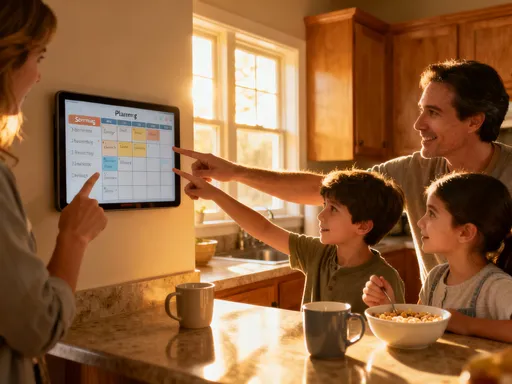
The real shift happened when the table stopped being just a meal planner and became our family’s central nervous system. It synced with all our calendars—work, school, extracurriculars—and started flagging conflicts before they became crises. “Friday at 6:00 PM: Mom’s book club, Dad’s team dinner, Lily’s recital. Would you like to reschedule family dinner to 5:00 or 7:00?” That kind of foresight changed everything.
I used to spend Sunday nights dreading the week ahead, trying to map out meals on a whiteboard that always ended up smudged and ignored. Now, on Sunday mornings, the table pulls up a weekly view and suggests a balanced meal plan based on what’s in the pantry, what’s on sale at the local grocery store, and what we’ve enjoyed before. It even accounts for leftovers. “Monday: grilled chicken, Tuesday: stir-fry using leftover veggies, Wednesday: slow-cooker stew.” Simple. Practical. And always flexible.
But the magic wasn’t just in the meals—it was in the coordination. The table began sending personalized reminders. My son got a playful animation on his tablet: “Dinner in 15! Your favorite pasta is ready.” My partner got a voice alert through his earbuds: “Head home now to make dinner at 6:30.” I got a gentle nudge on the kitchen screen: “Start rice in 10 minutes.” No yelling. No repeating myself. Just seamless flow.
And on busy days, it would suggest “no-cook” nights or remind me to prep something in the morning. “Tuesdays are heavy. Would you like to start the chili in the slow cooker before work?” That kind of support lifted a mental load I didn’t even realize I was carrying. I wasn’t just saving time—I was saving energy, patience, and peace of mind.
How the Kids Stopped Fighting (And Started Showing Up)
I’ll admit, I was worried the kids would hate it. I imagined eye rolls, complaints about “big brother watching.” But the opposite happened. They loved it. The table had a kid-friendly mode—colorful icons, fun sounds, and a visual countdown that turned dinner into a game. “Five minutes until dinner—race you to the table!” it would say, and suddenly, they were running downstairs, laughing.
They started using it on their own. My daughter set up a reminder for her science project deadline. My son used the table’s calendar to block “homework time” so we wouldn’t interrupt him. They felt more in control, not less. And when the table displayed the family schedule each morning—“Today: school, soccer, piano, family dinner”—they knew what to expect. No more “I didn’t know we were eating together!” excuses.
What surprised me most was how it helped them develop responsibility. The table didn’t nag—it invited. “Would you like to help plan tomorrow’s dinner?” it would ask, and suddenly, my daughter was browsing recipes, suggesting tacos, and even volunteering to set the table. My son started checking the calendar before making plans with friends. They weren’t just following rules—they were participating in the family rhythm.
And the best part? They started showing up. Not just physically, but emotionally. At dinner, the phones stayed in the living room. We talked—really talked. About school, dreams, funny moments. The table didn’t force it. It just made space for it by handling the logistics so we could focus on each other.
The Quiet Confidence of a Life That Flows
There’s a quiet confidence that comes from knowing your life isn’t hanging by a thread. Before, I was the thread. I held the calendar, remembered the appointments, decided the meals, reminded everyone of everything. I was the invisible engine keeping things running—and I was exhausted.
Now, I’m not needed in the same way. And that’s not a loss—it’s a gift. The table carries the small burdens so I can focus on the big things: listening to my daughter’s story, helping my son with his project, sharing a quiet moment with my partner. I’m not micromanaging dinner; I’m *enjoying* it.
My partner noticed the change too. “I don’t feel nagged anymore,” he said one night. “I get reminders that feel helpful, not critical. I actually *want* to be here.” That hit me. We weren’t just more organized—we were more connected. The table didn’t fix our relationship, but it removed the friction that was wearing us down.
We still have busy days. We still forget things. But now, when something slips, it’s not a crisis. The table adjusts. It reschedules. It suggests alternatives. And in that flexibility, we found freedom. We’re not perfect, but we’re present. And that shift—from effort to ease—changed how we see each other, our home, and ourselves.
More Than a Table: A New Kind of Home Intelligence
Looking back, I realize the smart dining table wasn’t the solution—it was the symbol. It represented a shift in how we think about our homes. We used to build houses for shelter, then for comfort. Now, we can build them for *care*. A smart home doesn’t have to be cold or complicated. It can be warm, intuitive, and deeply human.
This table didn’t take over our lives. It made space for them. By handling the noise—the reminders, the planning, the nagging—it gave us back silence we could fill with laughter, stories, and presence. It taught me that technology, when designed with empathy, doesn’t distance us—it brings us closer.
And it’s not just about dinner. It’s about creating rituals that matter. About raising kids who feel seen and heard. About being a partner who shows up, not just survives. When the little things run smoothly, the big things—love, growth, calm—finally have room to grow.
I don’t see the table as a machine anymore. I see it as part of our family’s story. It’s the quiet presence that helps us breathe, connect, and remember what home is really for. And if that’s the future of smart living, I’m all in.