Tired of arguing about household expenses? This simple tool brought our family peace
Money talk is hard—especially when it’s about who spent what and why. I used to dread those tense dinners where grocery bills turned into full-blown debates. My partner and I loved each other, but our spending habits didn’t always see eye to eye. Then we found a better way: not budgeting apps, not lectures, but a quiet, smart system that shows us both the full picture—without blame, without stress. It didn’t just track dollars; it helped us understand each other. And honestly, it changed how we connect. What started as a simple search for financial clarity became something deeper—a way to feel closer, more in sync, and truly heard at home.
The Moment We Knew Something Had to Change
It was a Thursday night. The kids were finally asleep, the dishes done, and we were sitting at the kitchen table going over the week’s receipts. Nothing dramatic, just routine. Then I saw it—a grocery total that was $40 over what we’d agreed on. I didn’t yell. I didn’t slam anything. I just looked up and said, 'Again?' And that one word cracked open something much bigger than a budget line.
What followed wasn’t really about groceries. It spiraled into a two-hour conversation about priorities, stress, and feeling unappreciated. He thought I was being too strict. I felt like my efforts to keep things balanced were being ignored. We weren’t mad at each other—we were frustrated with the pattern. The truth? We both wanted the same things: a stable home, happy kids, breathing room in our month. But we kept tripping over the details.
That night, I lay awake thinking. Was it fair to expect him to remember every small expense? Was I making money conversations feel like interrogations? And why did talking about spending make us both so defensive? I realized then that our fights weren’t about money itself. They were about trust. About whether we were on the same team. About whether we could talk about something sensitive without it turning into a battle. Something had to change—not just how we tracked spending, but how we saw each other in the process.
Why Most Budgeting Tools Failed Us
We weren’t lazy about money. We’d tried everything. Spreadsheets with neat rows and color-coded tabs. Envelope systems where cash lived in labeled pockets. Even one of those printed monthly planners you hang on the fridge. We meant well. But after a few weeks, the system always fell apart. Either it felt too rigid, like living under financial house arrest, or too vague, like writing goals on a foggy mirror.
The real problem wasn’t the tools themselves—it was how they made us feel. Most budgeting apps treated us like numbers, not people. They’d flag a coffee shop purchase with a red alert, as if I’d committed a crime. But they didn’t know that day had been my third back-to-back PTA meeting, or that the barista remembered my name and made me smile when I was exhausted. The app saw overspending. I saw a moment of comfort. And when my partner got a notification that I’d gone over the 'dining out' limit, it didn’t feel like support. It felt like being watched.
Other tools were too impersonal. They’d categorize a pharmacy trip as 'health,' but not see that it was for our daughter’s first ear infection, or that I’d stood in line for 20 minutes while she cried on my shoulder. The emotional weight of those moments? Invisible. The apps focused on cutting, not understanding. They gave us data, but not insight. We didn’t need more control. We needed more clarity—and connection. What we really wanted was a way to see our spending in context, not just in columns.
Discovering Spending Record Analysis: A Game Changer
It came up during a coffee chat with my friend Lisa. We were talking about how tired we both felt—mentally, emotionally—and somehow the conversation turned to money. She mentioned this tool she and her husband had started using, not to control spending, but to understand it. No budgets, no guilt. Just a shared view of where money was going, organized around what mattered most to them: family, travel, peace of mind.
I’ll admit, I was skeptical. Another app? Really? But she showed me her screen—just a simple dashboard with clean visuals. Instead of categories like 'groceries' or 'gas,' it grouped spending into themes like 'home comfort,' 'family time,' and 'personal recharge.' And there was a note next to one entry: 'Bought new pillows—finally sleeping better!' That hit me. This wasn’t just tracking. It was storytelling.
She explained that the system used smart analysis to learn what types of purchases fit each theme over time. It didn’t judge. It just reflected. And every week, she and her husband would look at the summary together and talk. Not argue. Talk. I thought about how different that sounded from our tense receipt reviews. What if we could see our spending not as a report card, but as a journal? What if we could finally understand each other’s choices, not just question them?
How It Works—Without the Tech Jargon
Setting it up was easier than I expected. No tech degree, no hours of setup. We linked our checking and credit accounts securely—the same level of encryption banks use—so everything updated automatically. No more manual entry. No more forgetting that Amazon order or the school fundraiser donation.
Then came the fun part: choosing our shared themes. We sat together and talked about what we wanted our money to support. 'Family weekends' was a big one—those spontaneous trips to the lake or the pumpkin patch. 'Future vacation' for the beach house we dream of renting next summer. 'Home peace' for things that made the house feel calmer, like better lighting or noise-canceling headphones for the home office. Even 'small joys'—because sometimes, a new cookbook or a potted plant is worth it.
Once we set those themes, the system started learning. It saw that coffee shop visits on Saturday mornings usually meant family time, not just caffeine. It recognized that bookstore trips often led to bedtime stories with the kids. Over time, it sorted transactions into the right themes, and we could adjust if it got something wrong. The best part? Every Sunday, we got a simple email summary—just one page, with a few charts and a short recap. No jargon. No pressure. Just a gentle nudge: 'Here’s how your spending supported your life this week.'
Turning Data Into Dialogue
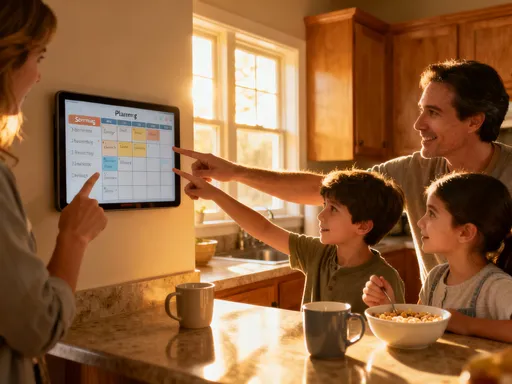
We started our first review on a quiet Sunday morning, coffee in hand. The kids were building LEGO towers in the living room, and we sat at the kitchen table with my phone between us. I’ll never forget that first look at the weekly summary. It showed we’d spent more than usual on 'home comfort'—mostly new bedding and a slow cooker. My instinct was to explain, to justify. But then my partner said something unexpected: 'Looks like you were trying to make home feel cozier.'
And just like that, the tone shifted. This wasn’t about numbers. It was about intention. We started asking different questions: 'Was this worth it?' 'How did this purchase make you feel?' 'Did this help your week go better?' When we saw a few takeout meals under 'family time,' we didn’t frown. We laughed. 'That was the night we were too tired to cook and watched movies in our pajamas. Best night ever.'
One week, the report showed several coffee shop visits under 'personal recharge.' I braced for judgment. But my partner said, 'You’ve been working late a lot. Was this your way of resetting?' I nodded, surprised he’d noticed. That small moment opened up a bigger conversation about my workload and how I was coping. The tool didn’t fix anything. But it gave us a safe, neutral way to start talking—about money, yes, but also about stress, care, and what we each needed to feel balanced.
Building Trust, One Transaction at a Time
Over the months, something subtle but powerful changed. We stopped seeing spending as a zero-sum game—your gain is my loss. Instead, we began to see it as a window into each other’s world. That $25 for a gardening class? It wasn’t 'waste.' It was him reconnecting with something he loved before kids. The $18 for a fancy tea blend? Not 'indulgence.' It was my quiet ritual before the house woke up.
We started using small habits to build even more trust. Before any purchase over $100, we’d send a quick note: 'Thinking about this new grill—would you use it?' No rules, no approvals. Just a gesture of inclusion. And when I saw a surprise charge for a birthday gift he’d bought for me, I didn’t question the amount. I felt seen. He remembered I’d mentioned wanting that book months ago. The receipt didn’t just show a transaction. It showed care.
The system didn’t eliminate spending differences—we’re still different people. But it gave us a shared language. Now, when something comes up, we don’t jump to blame. We ask, 'What was this about for you?' And that simple question has softened so many conversations. We’re not policing each other. We’re learning each other. And in that space, trust has grown—not because we spend the same, but because we understand why we spend.
More Than Numbers: A Family That Understands Each Other
Today, our money talks are different. They’re shorter, calmer, and often end with a hug. We still have the Sunday review, but it’s less about the data and more about the story behind it. We’ve learned that a receipt can hold joy, stress, love, and fatigue—all in one line item. And when we see patterns, we don’t panic. We pause. We talk. We adjust.
This tool didn’t fix our finances. It didn’t make us rich or eliminate all stress. But it did something more important: it helped us grow closer. It turned money from a source of tension into a bridge. We’re not just managing a budget—we’re managing our relationship with intention. We’ve become better listeners, more patient, and more willing to see the heart behind the habit.
If you’re tired of fighting about money, I want you to know there’s another way. It’s not about stricter rules or perfect tracking. It’s about using technology not to control, but to connect. To see each other clearly. To replace suspicion with curiosity. To build a home where money isn’t a weapon, but a way to show care. This quiet practice—reviewing spending together, with kindness—has done more for our marriage than any budget ever could. Because in the end, it’s not about the dollars. It’s about the life we’re building, one thoughtful choice at a time.