What If Your Phone Could Help You Build Better Habits—Without the Stress?
We’ve all been there—trying to stick to a new routine, only to give up after a few days. It’s not laziness; it’s just hard to stay consistent when life gets busy. But what if a simple app could quietly guide you, not by nagging, but by understanding your rhythm? I discovered this through my own messy mornings and distracted evenings. Let me share how tracking time—not tasks—gave me back control in the most unexpected ways. It wasn’t about doing more. It was about doing things when they actually fit. And that small shift changed everything.
The Morning Chaos: When Good Intentions Fall Apart
Imagine this: your alarm goes off, but you hit snooze—twice. You finally sit up, heart already racing, knowing you’re behind before the day has even started. The kids are calling from their rooms, the dog needs to go out, and your work bag is still unzipped from last night. You scramble to make lunches, spill coffee on your shirt, and realize you haven’t had a sip of water or a quiet moment to breathe. Breakfast? Skipped. Meditation? Laughable. By 8:15 a.m., you’re already tired, guilty, and wondering why every morning feels like a race you didn’t sign up for.
This was my reality for months. I tried every trick: color-coded planners, motivational quotes on sticky notes, even those cheerful morning routine checklists you see online. But no matter how many times I swore ‘tomorrow will be different,’ I kept falling back into the same cycle. The problem wasn’t that I didn’t want to change. The problem was that I was trying to force myself into a routine that didn’t match how I actually lived.
And I’m not alone. So many of us—especially women managing homes, jobs, and families—feel like we’re failing simply because we can’t keep up with someone else’s idea of a ‘perfect’ day. We blame ourselves for lacking discipline or focus. But here’s the truth: traditional to-do lists don’t fail because we’re weak. They fail because they ignore two crucial things: timing and energy. They ask, ‘What should I do?’ but never, ‘When am I actually able to do it?’
That’s when I started wondering—what if I stopped focusing on tasks and started paying attention to time? Not in a rigid, military-schedule way, but gently. What if I simply observed when I naturally focused, when I zoned out, when I felt calm or overwhelmed? I didn’t want another app yelling at me to ‘stay productive.’ I wanted something that could help me understand myself. That’s how I found time tracking—not as a tool for work reports, but as a mirror for my real life.
Discovering the Rhythm Beneath the Rush
I downloaded a simple time tracking app—nothing flashy, just something that let me tag activities and see how I spent my hours. I promised myself I wouldn’t judge, wouldn’t try to ‘fix’ anything. For one week, I just observed. And what I saw surprised me.
Every morning, before I even got out of bed, I spent an average of 45 minutes scrolling through social media. Not because I loved it, but because I was half-awake and didn’t know how to start the day. But here’s the twist: right after that, from 7:30 to 8:00 a.m., I had a 30-minute window of deep focus. I made coffee, sat at the kitchen table, and wrote emails or planned my day with surprising clarity. Then, once the kids woke up and the house exploded into motion, that focus vanished—until late evening, when I’d have another short burst of creativity after everyone was in bed.
These weren’t flaws. They were patterns. And seeing them laid out in colorful bars on a screen made me feel less broken and more… understood. For the first time, I wasn’t fighting against myself. I was learning how I actually worked. The app didn’t tell me to ‘stop wasting time.’ It just showed me where my time was going. And that small difference—observation without judgment—changed how I saw my whole day.
What I realized is that time tracking, when done gently, isn’t about control. It’s about awareness. It’s like holding up a mirror and finally seeing your reflection clearly—not the idealized version you see in motivational videos, but the real, messy, beautiful truth of how you live. And once you see that truth, you can start working with it instead of against it. That week didn’t fix my mornings, but it gave me something better: insight. And insight, I’ve learned, is the quiet beginning of real change.
From Data to Daily Magic: Small Shifts, Big Gains
Armed with my new awareness, I didn’t overhaul my life. I didn’t set five new habits or ban my phone from the bedroom. Instead, I made one tiny change: I moved my coffee ritual. Instead of brewing it in the kitchen and bringing it back to bed—where I’d inevitably pick up my phone—I started making coffee and sitting at the table right away. That simple shift cut my morning scrolling in half and gave me those 30 minutes of focus without any extra effort.
It felt like magic, but it wasn’t. It was alignment. I wasn’t forcing myself to be productive. I was designing my day to match my natural rhythm. And once I saw how powerful that could be, I started looking for other small opportunities. I noticed that my energy dipped hard after lunch, so instead of scheduling calls or deep work then, I started using that time for lighter tasks—replying to non-urgent emails, organizing drawers, or just walking the dog. And in the evenings, when I had that second wave of mental clarity, I began using it for creative projects—writing, planning, even sketching ideas for a garden I’d been dreaming about.
The beauty of this approach is that it doesn’t rely on willpower. You’re not trying to ‘push through’ fatigue or ‘motivate’ yourself to do something you hate. You’re simply matching the right activity to the right moment. It’s like gardening—you don’t yell at a tomato plant to grow faster. You give it sun, water, and the right soil. And when you treat your time that way, habits start to stick naturally.
I started small. Five minutes of journaling after my morning coffee. A five-minute stretch before bed. I didn’t track whether I did them perfectly. I just noticed when they felt easy—and when they didn’t. And slowly, those little moments became part of my rhythm. The app didn’t remind me. My body did. Because when you align with your own energy, consistency isn’t a battle. It’s a flow.
Family Time That Actually Feels Like Time Together
One of the biggest surprises was how this practice improved my family life. I used to feel guilty about not being ‘present’ enough—scrolling through my phone during dinner, zoning out during bedtime stories, or snapping at the kids when I was overwhelmed. But guilt didn’t help. It just made me feel worse.
So I started tracking our family’s time together—not to police anyone, but to understand when we were most connected. I tagged moments like ‘playing board games,’ ‘cooking dinner,’ ‘reading before bed,’ and ‘talking after school.’ After a few weeks, a pattern emerged: the hour after the kids had a snack was golden. They were calm, chatty, and open. The early evening, before homework and bath time, was when my partner was most relaxed and engaged.
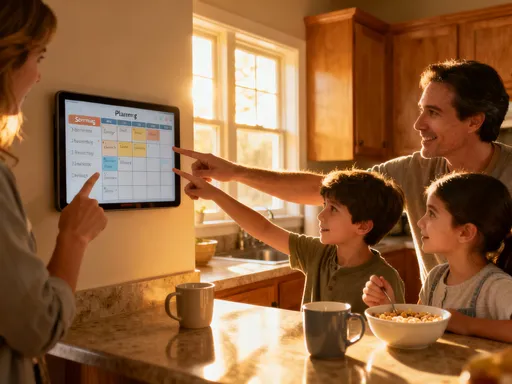
So I started protecting those windows. Instead of rushing through dinner to clear the table, I began leaving the dishes until later. We started eating together more often, laughing, sharing stories. I moved family game night to that post-snack window, and suddenly, it wasn’t a chore—it was something everyone looked forward to. I even synced a shared family calendar with color-coded blocks for high-energy and low-energy times, so we could plan activities when we were most likely to enjoy them.
Technology, in this case, didn’t pull us apart. It brought us together. The app didn’t replace connection—it protected it. By understanding our rhythms, we stopped scheduling family time during the moments we were all drained and started honoring the times we were actually able to show up. And that made all the difference. Family time stopped feeling like another item on the to-do list and started feeling like a gift.
Building a Life, Not Just a Schedule
Most habit advice focuses on speed—‘build a new habit in 21 days!’ or ‘stack your habits for maximum efficiency!’ But what if we stopped rushing? What if we focused not on how fast we could change, but on how sustainable that change could be?
That’s where time tracking helped me most. It didn’t give me a rigid schedule. It helped me find my ‘anchor moments’—the small, consistent parts of my day that I could build new habits around. Brushing my teeth. Making tea. Walking the dog. These weren’t tasks to check off. They were natural pauses in my rhythm, perfect for adding something new.
For example, I started flossing right after brushing my teeth at night. Not because I set a reminder, but because I noticed that was the one time I was already in the bathroom, with my mind quiet. Over time, it became automatic. Same with reading. I used to struggle to finish books, always ‘meaning to’ but never doing it. But I noticed that I had a few quiet minutes after turning off the lights but before falling asleep. So I started keeping a book on my nightstand and reading just five pages. Some nights I read more. Some nights I didn’t. But most nights, I read something. And over months, those pages added up.
The key wasn’t discipline. It was placement. By attaching new behaviors to existing rhythms, I removed the friction that usually kills habits. I wasn’t trying to ‘find time.’ I was using time I already had. And because these habits grew from my real life—not someone else’s ideal routine—they stuck. They felt gentle, not forced. And that’s how real change happens: not in dramatic overhauls, but in quiet, consistent alignment.
The Quiet Power of Being Seen—By an App
Here’s something I didn’t expect: using a time tracking app made me feel less alone. It sounds strange, I know. How can a piece of software make you feel seen? But think about it—how often do we go through our days without anyone truly noticing? We pour energy into work, family, chores, and obligations, but who’s paying attention to how we feel in the process?
The app didn’t judge me for staying up late. It didn’t scold me for spending an hour on the couch with my thoughts. It just recorded what happened. And in that non-judgmental presence, I started to offer myself the same kindness. When I saw that I’d spent an entire Sunday doing nothing but resting, I didn’t call it ‘lazy.’ I called it ‘necessary.’ The data didn’t lie. It showed me when I was tired, when I was creative, when I was distracted—not as failures, but as signals.
That shift—from self-criticism to self-awareness—was profound. I began treating myself like someone I loved. If my best friend told me she’d been overwhelmed and needed a quiet afternoon, I wouldn’t tell her to ‘push through.’ I’d tell her to rest. And slowly, I started speaking to myself that way. The app didn’t give me answers. It gave me clarity. And clarity, in turn, gave me compassion.
This isn’t about productivity. It’s about peace. It’s about building a relationship with yourself—one where you’re not constantly at war with your habits, but in conversation with your rhythm. And when you feel seen, even by a simple app, you start to believe that your time matters. That your energy matters. That you matter.
Making It Yours: How to Start Without Overthinking
If you’re curious about trying this, here’s how to begin—without stress, guilt, or pressure. First, pick one day. Just one. It can be a weekday or a weekend, but choose a day that feels somewhat typical. Download a simple time tracking app like Toggl or Clockify—both are free, easy to use, and let you tag activities with custom labels.
On that day, track everything you do, but not just by task. Tag activities by how they feel. For example: ‘working—focused,’ ‘scrolling—distracted,’ ‘playing with kids—joyful,’ ‘cooking—calm.’ This adds emotional context, which is where the real insights live. Don’t worry about being perfect. If you forget to track, just start again when you remember. This isn’t about accuracy. It’s about awareness.
At the end of the day, spend five minutes looking at your report. Don’t analyze. Just notice. Where did you feel alive? Where did time slip away? When were you most present? Do this for a week, then sit down with a cup of tea and review the whole week. Look for patterns, not problems. Maybe you’ll see that your best thinking happens in the morning. Maybe you’ll notice that family time feels richer after a walk. Maybe you’ll realize you’re more tired than you thought.
Then, pick one tiny shift. Move your coffee to the table. Read five pages before bed. Play a game during the kids’ post-snack calm. Let your data guide you, not pressure you. And remember: this isn’t about building a perfect life. It’s about building a life that fits. One that honors your energy, your rhythm, and your truth. The best routines aren’t forced. They grow—quietly, gently, beautifully—from seeing yourself clearly and saying, ‘You’re doing just fine.’