What If Your Next Bite in Corfu Tasted Like History?
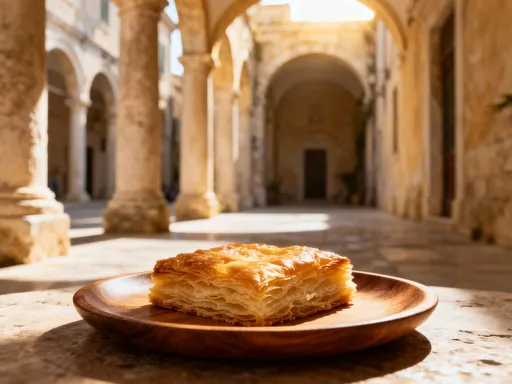
Imagine biting into a warm, flaky bougatsa as the morning sun glows on centuries-old Venetian arches. In Corfu, every meal feels like a conversation with the past. The island’s landmark buildings aren’t just stone and paint—they’re backdrops to food stories passed down for generations. I wandered narrow alleys where bakeries breathe tradition, and seaside taverns serve up more than just octopus—they serve memory. This is where architecture and appetite meet. Corfu is not only a feast for the eyes but a banquet for the soul, where every cobblestone pathway leads not only to a historic square but to a table set with generations of flavor. To travel here is to taste time itself.
Arrival in Corfu: First Impressions of Stone Streets and Savory Aromas
Descending toward Corfu Town by air, the island unfolds like a patchwork quilt stitched with olive groves, terracotta rooftops, and the shimmering Ionian Sea. The Old Fortress rises from the water like a sentinel, its stone ramparts weathered by centuries of wind and war. Built by Venetians to protect the island from Ottoman invasion, it now stands as a guardian of something more subtle—daily life. Beneath its shadow, the maze of the old town begins, a labyrinth of limestone alleys where the past is not preserved behind glass but lived, breathed, and served on ceramic plates.
The first step onto the island’s soil brings an immediate sensory embrace. The scent of wood-fired ovens mingles with the salt-kissed breeze, and the sound of church bells echoes above the chatter of locals gathering at kafenios. One such corner café, unmarked by neon signs or digital menus, draws a steady stream of elderly men debating politics over tiny cups of thick Greek coffee. Beside it, a family-run bakery releases clouds of steam each morning as trays of sesame-crusted bread emerge from stone ovens—recipes unchanged for decades, possibly longer. This is not nostalgia staged for tourists; it is continuity.
Corfu Town’s designation as a UNESCO World Heritage Site in 2007 was not merely about preserving monuments. It was a recognition that the island’s architecture forms an ecosystem for cultural survival. Regulations restrict modern construction, limit signage, and protect traditional façades, which in turn safeguard the spaces where local food culture thrives. Street vendors cannot be displaced by glass-fronted franchises, and family-run tavernas remain viable because the city’s rhythm still favors the human scale. In this way, the stones of Corfu do not merely house history—they feed it.
The Liston Promenade: Where Aristocracy Once Walked and Gyros Now Sizzle
Walking beneath the graceful arcades of the Liston Promenade feels like stepping into a 19th-century postcard. Built during the French occupation under Napoleon’s brother, Louis Bonaparte, the colonnade was designed to mirror the elegance of Parisian boulevards. Pastel-colored buildings with shuttered windows and wrought-iron balconies line both sides, their arches casting dappled shadows on the pavement below. Once reserved for aristocrats and military officers, the Liston today welcomes all—tourists sipping freddo cappuccinos, children chasing pigeons, and elderly couples sharing quiet conversations over ouzo.
Buried beneath one of these arches, almost hidden from view, is a modest souvlaki stand operated by the Papadopoulos family for over four decades. No flashy branding, no online ordering—just a small counter, a charcoal grill, and a chalkboard menu. The owner, Dimitris, speaks with pride about his grandfather, who began grilling pork skewers here when the square was still traversed by horse-drawn carriages. “He used the same marinade,” Dimitris says, turning lamb over the flames. “Olive oil, lemon, oregano, and time. Nothing more.” The meat, tender and aromatic, is wrapped in pita with tomatoes, onions, and a smear of tzatziki—simple, yet deeply satisfying.
What makes this possible is the protective framework surrounding the Liston. As a protected historic zone, commercial development is tightly controlled. International fast-food chains cannot set up shop here, not because of resistance from locals alone, but because of zoning laws that prioritize authenticity. This ensures that the food sold in such spaces remains rooted in local tradition rather than globalized convenience. The result is a culinary landscape where flavor is not sacrificed for speed, and where every bite carries the weight of legacy. The Liston is no longer just a place to walk—it is a place to taste.
Spianada Square: Open Space, Big Flavors
Adjacent to the Liston lies Spianada Square, the largest public space in Greece and once a military parade ground during the British protectorate. Today, it is a vibrant social heart—where families stroll after dinner, teenagers play football, and elderly men gather for backgammon under the shade of plane trees. The open expanse, bordered by neoclassical buildings and a cricket pitch—a remnant of British influence—creates a rare urban breathing room, ideal for gatherings that celebrate both community and cuisine.
During the summer months, Spianada transforms into an open-air food festival every Friday and Saturday night. Mobile food stands emerge as if by ritual, offering everything from grilled cheese pies to freshly squeezed pomegranate juice. One of the most beloved treats is diples—thin strips of dough fried until crisp, then drenched in warm honey and sprinkled with crushed walnuts and cinnamon. Often prepared during festivals and religious holidays, diples are a bridge between past and present, their recipe passed down through generations of home cooks.
These seasonal events do more than satisfy hunger—they revive forgotten dishes and reinforce communal bonds. Elderly women teach grandchildren how to roll the delicate dough, while local musicians play traditional kantades, serenading the crowd. The city’s investment in public space thus becomes an investment in cultural continuity. When urban design allows for spontaneous gatherings, food traditions are not confined to private kitchens but flourish in the open air. Spianada proves that preservation is not only about protecting buildings but about creating room—literally and figuratively—for shared experiences to unfold.
Villa Mon Repos: A Noble Mansion, A Humble Olive Oil Tasting
Nestled in a quiet grove on the outskirts of Corfu Town, Villa Mon Repos stands as a testament to neoclassical elegance. Once the summer residence of Greece’s royal family, the villa now serves as a museum dedicated to the island’s natural history. Its symmetrical façade, marble columns, and sweeping gardens evoke an era of refinement and privilege. Yet just beyond the estate’s manicured lawns lies a different kind of heritage—one rooted not in royalty but in the soil.
A short walk from the villa, a small agricultural cooperative operates a tasting station for Corfiot olive oil. The oil, cold-pressed from Koroneiki olives grown in ancient groves, is golden-green in color and carries a bold, peppery finish. “This tree,” says Maria, the cooperative’s coordinator, pointing to a gnarled trunk nearby, “is over 300 years old. Its fruit has fed families through wars, occupations, and modernization.” The connection between the villa and the olive press is not coincidental. The land once cultivated to supply noble tables now sustains local artisans, their work rooted in the same earth that once served kings.
Visitors are invited to sample the oil drizzled over freshly baked bread, accompanied by olives, capers, and sun-dried tomatoes—all grown within a few kilometers. The experience is simple, yet profound. It illustrates how architectural heritage and agricultural tradition are not separate strands but interwoven threads of identity. The villa may house artifacts, but the oil—liquid gold in a clay bowl—tells a more visceral story of resilience, continuity, and flavor. In Corfu, even the most opulent buildings point back to the table.
The Church of Agios Spyridon: Faith, Festivals, and Festive Sweets
Rising above the red-tiled roofs of Corfu Town, the bright red dome of the Church of Agios Spyridon is an unmistakable landmark. Dedicated to the island’s patron saint, the church houses the saint’s silver-encased relics, which are carried through the streets in elaborate processions during Easter and other religious festivals. But beyond its spiritual significance, the church plays a central role in preserving one of Corfu’s most cherished culinary traditions—festive baking.
During Holy Week, the air fills with the scent of sweet dough and cinnamon as families prepare lazarakia—small, lamb-shaped breads symbolizing Christ’s resurrection. Made from flour, butter, eggs, and orange zest, the breads are shaped by hand, often by grandmothers teaching their granddaughters the precise curl of the lamb’s ear or the depth of its folds. These treats are not sold in shops but shared among neighbors, gifted to priests, and placed on family altars before being eaten in communal feasts.
The connection between faith and food here is inseparable. Religious calendars dictate not only when certain dishes are made but why they endure. Without the annual cycle of saints’ days and holy celebrations, many of these recipes might fade into obscurity. The church, therefore, does more than inspire devotion—it acts as a living archive of taste. Its bell tower calls not only to prayer but to the kitchen, reminding residents that to honor the sacred is also to feed the family. In Corfu, worship is not confined to hymns; it is also expressed in the kneading of dough and the sharing of meals.
Asprokavos and Rural Kitchens: Beyond the City’s Monuments
Leaving the coastal towns behind, a journey inland reveals a different rhythm of life. In villages like Asprokavos, time moves at the pace of simmering stews and rising dough. Stone houses cling to hillsides, their walls built from local limestone, and narrow paths wind past abandoned fountains and forgotten chapels. Here, history is not curated in museums but embedded in daily practice.
In a family kitchen shaded by a grapevine pergola, Eleni prepares pastitsada, Corfu’s most iconic stew. Beef is slow-cooked in a rich sauce of tomatoes, red wine, cloves, and cinnamon—spices introduced during Venetian rule. The dish, traditionally served on Sundays and feast days, is tied to both the liturgical calendar and ancestral memory. “My grandmother made this when my father was a boy,” she says, stirring the pot with a wooden spoon. “It was the dish for celebrations, for when someone came home.” The recipe is not written down but carried in her hands, her instincts, her timing.
Not far from her home, the ruins of a 15th-century monastery stand silent, its courtyard now home to wild herbs and nesting birds. Centuries ago, such monasteries were centers of agricultural production, cultivating vineyards, olive groves, and vegetable gardens. They also preserved knowledge—herbal remedies, fermentation techniques, seasonal preservation methods. Today, modern farm-to-table initiatives draw inspiration from these old systems, emphasizing local sourcing, seasonal eating, and minimal waste. The past, it seems, is not behind but ahead—offering solutions for sustainable living rooted in tradition.
Conclusion: When Buildings Feed the Soul as Much as the Stomach
Corfu teaches a profound truth: that architecture and food are not separate realms but intertwined expressions of culture. The island’s landmarks—its fortresses, churches, villas, and village squares—do more than impress the eye. They shelter traditions, sustain livelihoods, and serve as stages for the rituals that nourish both body and identity. To walk through Corfu is to move through layers of history, each one flavored with the scent of baking bread, simmering stews, and sun-ripened olives.
Travelers often come seeking beauty, but they leave with something deeper—a sense of connection. The bougatsa eaten under Venetian arches, the souvlaki shared beneath French arcades, the olive oil pressed from ancient trees—all of it reminds us that heritage is not static. It is alive, edible, and deeply personal. The preservation of historic sites is not merely about protecting the past but about ensuring that future generations can still taste it.
So let your journey be slow. Let your meals be mindful. Let every bite be an act of remembrance. In Corfu, history is not behind glass—it is on your plate. And when you eat, you do not just consume food. You participate in a story that has been unfolding for centuries, one that welcomes you not as a spectator, but as a guest at the table.