You Won’t Believe What I Saw in the Serengeti at Dawn
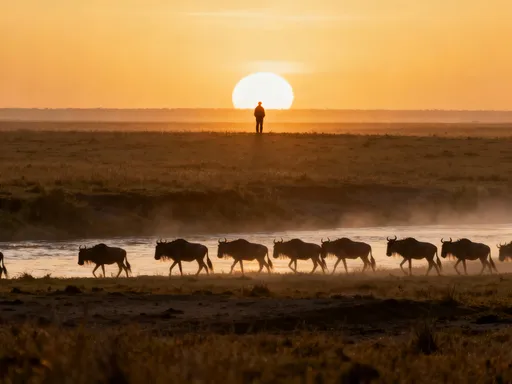
There’s something almost magical about the Serengeti at first light—when the sky bleeds gold and thousands of wildebeest move like a living river across the plains. I came for the wildlife, but stayed for the silence, the vastness, the raw beauty of nature untouched. This isn’t just a safari; it’s a front-row seat to one of Earth’s greatest shows. If you’ve ever wondered what true wilderness feels like, let me take you there. The air is cool, the horizon glows with promise, and somewhere in the distance, a lion’s low call echoes across the savanna. In that moment, the modern world fades. What remains is simple, ancient, and profoundly moving.
The Serengeti Unfiltered: More Than Just a Safari
Spanning nearly 15,000 square kilometers in northern Tanzania, the Serengeti National Park forms the heart of one of the most ecologically significant landscapes on the planet. Combined with Kenya’s Maasai Mara to the north, it supports the largest terrestrial mammal migration in the world. Designated a UNESCO World Heritage Site in 1981, the Serengeti is not merely a park—it is a living, breathing ecosystem that has evolved over millennia. Its name, derived from the Maasai word *Siringet*, means “endless plains,” a description that becomes breathtakingly literal when you stand atop a kopje and gaze across the horizon.
What sets the Serengeti apart from other African wildlife destinations is its sheer scale and ecological continuity. Unlike more fragmented reserves, the Serengeti maintains a largely unbroken chain of habitats—from open grasslands to riverine forests and acacia woodlands—allowing animals to follow ancient migratory paths without obstruction. This ecological integrity enables natural processes to unfold with minimal human interference. For travelers, this means witnessing behaviors that are increasingly rare elsewhere: herds numbering in the hundreds of thousands, predators hunting in daylight, and newborn calves standing within minutes of birth.
First impressions of the Serengeti often defy expectation. Many visitors anticipate seeing animals clustered around waterholes or scattered in small groups, but the reality can be overwhelming. During peak migration, the sheer density of life is staggering—wildebeest as far as the eye can see, zebra stripes shimmering in the heat, and dust clouds rising like storm fronts. It’s not uncommon to feel small, humbled, even awestruck. The silence between animal movements, broken only by the wind or a distant birdcall, adds to the sense of being in a world governed by natural rhythms rather than human schedules.
Why Timing Changes Everything: Seasons and Migrations
The Serengeti’s most famous phenomenon is the Great Migration—a continuous, clockwise movement of over 1.5 million wildebeest, 200,000 zebras, and thousands of gazelles across the ecosystem. This natural spectacle is driven by rainfall patterns and the search for fresh grazing. The migration isn’t a single event but a year-round journey, with different phases offering unique experiences for visitors. Understanding these cycles is key to planning a meaningful safari.
From December to March, the southern Serengeti and the adjoining Ndutu plains become the stage for the calving season. Over 500,000 wildebeest calves are born within a few weeks, creating a time of abundance—and intense predator activity. Lions, hyenas, and cheetahs are especially active during this period, offering dramatic wildlife viewing. The short grass plains provide excellent visibility, making it easier to spot predators on the hunt. For those seeking emotional intensity and the miracle of new life, this season is unmatched.
As the dry season approaches in May and June, the herds begin their northwestward movement, following receding rains. By July, they reach the central Serengeti, where they face one of their greatest challenges: the crossing of the Grumeti River. Crocodile-infested waters, strong currents, and steep banks make this a perilous passage. Watching thousands of animals attempt the crossing—some succeeding, others falling prey to waiting predators—is both thrilling and humbling. These crossings are not guaranteed every year, but when they occur, they are among the most powerful wildlife spectacles on Earth.
By late August and September, the migration pushes into the northern Serengeti and across into Kenya’s Maasai Mara. This region is more rugged, with fewer roads and greater exclusivity. River crossings at the Mara River are particularly dramatic, often involving massive herds leaping from high banks into turbulent water. October and November see the herds begin their return journey south as short rains revive the grasslands. Each season offers distinct advantages, and choosing the right time depends on what kind of experience you seek—whether it’s predator encounters, dramatic river crossings, or solitude in the wilderness.
Choosing Your Corner: Regions Within the Serengeti
The Serengeti is not a uniform landscape but a mosaic of distinct regions, each with its own character, wildlife concentrations, and visitor experience. Knowing the differences can help travelers select the area that best aligns with their interests and expectations. The park is commonly divided into four main zones: the Central (Seronera) Valley, the Northern (Lobo) Sector, the Southern (Ndutu) Plains, and the Western Corridor.
The Central Serengeti, centered around the Seronera Valley, is the most accessible and frequently visited part of the park. It boasts reliable wildlife sightings year-round, including high concentrations of lions, leopards, and elephants. The area is well-serviced with lodges and permanent camps, making it ideal for first-time visitors. However, its popularity can mean more vehicles around animal sightings, particularly near prime leopard spots in the kopjes. While convenient, it may not offer the sense of solitude that some travelers seek.
In contrast, the Northern Serengeti, also known as the Lobo area, is remote and less developed. This region comes alive during the late migration season, when herds arrive in search of greener pastures. With fewer lodges and limited access, it provides a more exclusive experience. The terrain is more varied, with rolling hills and river valleys, and sightings of cheetahs and smaller predators are common. Because of its distance from the main gate, it attracts fewer day visitors, allowing for quieter game drives and a deeper connection with the landscape.
The Southern Serengeti and Ndutu area, located near the Ngorongoro Conservation Area, is the calving ground during the short rains. This vast expanse of short grass plains is ideal for spotting predators in action, especially cheetahs, which rely on open visibility for hunting. The area is also rich in birdlife and supports a high density of flamingos during the wet season. While some parts of Ndutu fall outside the national park boundary, they are often included in Serengeti itineraries due to their ecological continuity.
The Western Corridor, stretching from the central to the northwestern Serengeti, is defined by the Grumeti River and its dense forests. This region sees fewer tourists, making it an excellent choice for those seeking privacy. The river crossings here are less dramatic than those in the north, but still impressive. The corridor also supports a unique mix of wildlife, including hippos, crocodiles, and forest-dwelling primates. Mobile tented camps operate here seasonally, offering immersive experiences without permanent infrastructure.
The Real Magic: Sunrise, Silence, and Solitude
One of the most profound experiences in the Serengeti occurs long before most travelers wake up. At 5:30 a.m., while the stars still cling to the sky, the camp staff is already preparing hot tea and packed breakfasts. By 6:00 a.m., the safari vehicle rolls quietly onto the plains, headlights off, engine muted. As dawn breaks, the world transforms. The horizon shifts from indigo to rose, then molten gold. The air is crisp, carrying the scent of damp earth and wild herbs. A mist rises from the grass, dissolving as the sun climbs.
It is during these early hours that the Serengeti feels most alive—and most silent. Without the hum of other vehicles, the sounds of nature emerge clearly: the low grunt of a wildebeest, the rustle of grass as a hare darts past, the distant whoop of a hyena finishing its night’s work. A herd of elephants moves slowly through a stand of acacias, their shadows long and soft in the morning light. A pair of giraffes bends gracefully to drink, their reflections shimmering in a shallow pool. There is no rush, no agenda—just the slow unfolding of a day in the wild.
This sense of solitude is rare in today’s world, and in few places is it more accessible than the Serengeti. Even in busier zones, early morning drives often yield moments of complete isolation. The absence of crowds allows for a deeper emotional connection with the landscape. You begin to notice small details: the way light filters through a baobab tree, the pattern of zebra stripes catching the sun, the quiet dignity of a lioness watching over her cubs. These are not just photographs waiting to be taken—they are moments of presence, of being fully in the world.
As the sun rises higher, the light changes dramatically. By mid-morning, the golden glow gives way to sharp clarity. Shadows shorten, colors intensify, and the heat begins to shimmer above the plains. Animals retreat to shade, and the pace of life slows. This shift underscores how much the Serengeti is governed by natural rhythms. The best experiences come not from forcing encounters, but from aligning with the land’s own timing—rising with the sun, resting when the heat peaks, and returning to camp as dusk paints the sky in fiery hues.
Beyond the Big Five: Unexpected Wonders of the Wild
While many visitors arrive hoping to spot the Big Five—lion, leopard, elephant, buffalo, and rhino—the true richness of the Serengeti lies in its biodiversity. The park is home to over 500 bird species, dozens of mammal types, and countless insects and reptiles, each playing a role in the ecosystem’s balance. Some of the most memorable moments come not from seeing a famous predator, but from encountering the unexpected.
Take the serval, for example—a slender, golden-furred cat with oversized ears that hunts rodents in the grasslands. Elusive and nocturnal, it is rarely seen, but on quiet mornings in the southern plains, sharp-eyed guides may spot one crouched low, ears twitching. Or consider the aardvark, a shy, burrowing mammal that emerges only at night to feed on ants and termites. Though seldom observed, its presence is evident in the scattered mounds it leaves behind—small signs of a hidden world.
Dung beetles, often overlooked, are ecological heroes. Within minutes of a large animal defecating, these industrious insects arrive to roll, bury, and consume the waste, recycling nutrients and aerating the soil. Watching a beetle navigate a dung ball across uneven terrain, fending off rivals, is a surprisingly captivating sight. Similarly, the birdlife is astonishing: from the iridescent lilac-breasted roller to the massive kori bustard, the heaviest flying bird in the world. Raptors like the bateleur eagle and the African fish eagle patrol the skies, while ground hornbills walk with a stately gait, their deep calls echoing across the plains.
Predators and scavengers alike play vital roles. While lions and leopards command attention, smaller hunters like the black-backed jackal and the serval maintain balance by controlling rodent populations. Hyenas, often misunderstood, are highly intelligent social animals that clean up carcasses and prevent disease spread. Even vultures, though not glamorous, are essential to the ecosystem. Their rapid arrival at a kill helps recycle biomass and limits the spread of pathogens. Every creature, no matter how small or seemingly insignificant, contributes to the Serengeti’s resilience.
Some of the most unforgettable moments are spontaneous: a cheetah sprinting across the plain in pursuit of a gazelle, its body a blur of motion; elephants using their trunks to strip bark from a tree; a family of warthogs trotting in single file, tails held high. These are not staged performances but real, unscripted moments of survival, adaptation, and coexistence.
Staying Close Without Breaking the Spell: Camps and Comfort
Accommodation in the Serengeti ranges from permanent lodges to mobile tented camps, each offering a different way to experience the wilderness. The best options blend comfort with environmental sensitivity, allowing guests to stay immersed in nature without sacrificing basic amenities. Many high-quality camps are designed to have minimal impact on the landscape, using solar power, composting toilets, and locally sourced materials.
Permanent lodges, found primarily in the central Serengeti, offer solid structures with en suite bathrooms, hot water, and dining facilities. They are ideal for travelers who prefer stability and consistent service. However, their fixed locations mean wildlife must come to them, rather than the other way around. Some lodges are built on rocky outcrops called kopjes, offering panoramic views and frequent animal visits—lions have been known to lounge on lodge terraces.
Mobile tented camps, on the other hand, move with the seasons to follow the migration. These semi-permanent setups consist of spacious canvas tents with real beds, rugs, and private bathrooms with bucket showers. Meals are prepared by skilled camp chefs and served under the stars. The temporary nature of these camps ensures low environmental impact and access to remote areas. Guests often describe the experience as both adventurous and deeply comforting—a perfect balance of wildness and warmth.
Responsible tourism is a cornerstone of modern Serengeti travel. Many operators partner with conservation organizations, contribute to anti-poaching efforts, and employ local staff. By choosing eco-conscious camps and ethical tour companies, visitors help protect the very landscapes they come to see. Sustainable practices are not just a trend—they are essential to preserving the Serengeti for future generations. Every choice, from the camp you stay in to the guide you hire, has an impact.
Making It Real: Planning a Meaningful Visit
Planning a trip to the Serengeti may seem daunting, but with the right preparation, it becomes an achievable and deeply rewarding journey. International flights typically land at Kilimanjaro International Airport or Julius Nyerere International Airport in Dar es Salaam, followed by a domestic flight to one of the Serengeti’s airstrips—such as Seronera, Grumeti, or Kogatende. These small flights, while an added expense, save time and energy compared to long overland drives.
Visitors to Tanzania require a visa, which can usually be obtained upon arrival or applied for online in advance. Health precautions include recommended vaccinations—such as yellow fever—and malaria prophylaxis. While medical facilities in the park are limited, most reputable tour operators include emergency evacuation coverage as part of their packages.
Choosing a tour operator is one of the most important decisions. Experienced, licensed guides not only ensure safety but enhance the experience through their knowledge of animal behavior, tracking skills, and deep familiarity with the landscape. They know where to find leopards in the trees, predict river crossing points, and interpret subtle signs of wildlife activity. A great guide transforms a good safari into an exceptional one.
Packing wisely is also essential. Lightweight, neutral-colored clothing, a wide-brimmed hat, sturdy walking shoes, binoculars, and a good camera are all recommended. While smartphones can capture decent images, a DSLR or mirrorless camera with a telephoto lens allows for closer shots without disturbing animals. Most camps provide drinking water, but bringing a reusable bottle supports sustainability efforts.
Beyond logistics, the most meaningful visits are those made with intention. The Serengeti is not a theme park but a fragile, living ecosystem. Travelers who approach it with respect, curiosity, and a desire to learn often leave transformed. By supporting conservation-minded operators, minimizing waste, and following park guidelines, visitors become stewards of this extraordinary place.
The Serengeti isn’t just a destination—it’s a reminder of how wild the world once was. Every gust of wind, every distant roar, every herd on the horizon speaks to something deep within us. By choosing to visit thoughtfully, we don’t just witness nature’s masterpiece—we help ensure it endures. Have you felt that call of the wild? It’s waiting.