You Won’t Believe These Hidden Corners of Mecca’s Urban Soul
Mecca is more than the Grand Mosque—it’s a city alive with quiet alleyways, rooftop gatherings, and layers of history beneath the modern surface. I wandered beyond the pilgrimage paths and discovered urban spaces where tradition meets everyday life. These hidden spots aren’t on tourist maps, but they reveal the true heartbeat of the city. Let me take you where few travelers go.
The Pulse Beyond the Haram
At first glance, Mecca appears defined by movement—millions circling the Kaaba, streams of pilgrims flowing through air-conditioned corridors, and the constant hum of devotion echoing from the Grand Mosque. Yet just steps away from this epicenter of spiritual energy lies a different rhythm, one shaped not by ritual alone but by daily life. This is the Mecca known to its residents: a city where schoolchildren walk to class in crisp white uniforms, where delivery men balance trays of dates and coffee through narrow lanes, and where shopkeepers greet neighbors by name. The contrast is striking—between the global religious stage and the intimate, local streets that pulse with ordinary human activity.
Al-Masjid al-Haram dominates the skyline, its towering minarets and vast plazas symbolizing unity and scale. But behind its eastern and western edges, tucked between high-rise hotels and modern walkways, lie residential blocks where families have lived for generations. These neighborhoods do not pause for pilgrimage season; they continue with a steady cadence, adapting to the influx without losing their identity. Streets like Suq al-Layl and Al-Ma’aisim Road transform during Hajj, but for much of the year, they function as commercial arteries for locals, offering everything from school supplies to traditional remedies.
What makes this urban duality so compelling is how seamlessly the sacred and the secular coexist. A tailor might work ten minutes from the Mataf, stitching ihram garments for pilgrims while also altering school dresses for his daughter. A pharmacist could be dispensing medicine in the morning and praying in the Grand Mosque by noon. The city does not compartmentalize; it integrates. This integration is visible in the architecture, too—glass-fronted towers rise beside centuries-old stone homes, their facades weathered but still standing. The urban fabric of Mecca is not monolithic; it is layered, with each generation adding to the city’s evolving story.
Understanding Mecca as a living city, rather than just a pilgrimage destination, changes how one experiences it. It invites travelers to look beyond the rituals and appreciate the people who sustain the city year-round. These residents are not extras in a religious drama—they are the heartbeat of Mecca, keeping its streets alive when the crowds have gone. To walk among them is to witness a different kind of devotion: one to family, to community, and to continuity.
Al-Ma’aisim: Where History Meets the Everyday
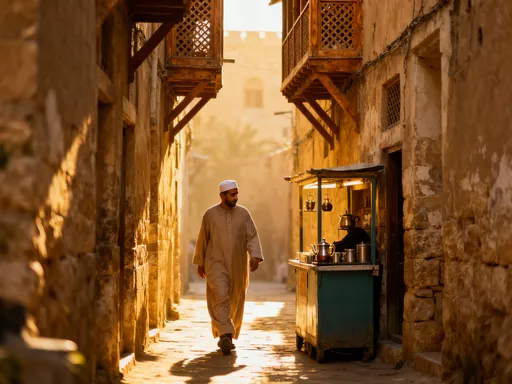
Among Mecca’s oldest surviving neighborhoods, Al-Ma’aisim stands as a quiet testament to the city’s enduring character. Nestled in the lower slopes near the northern edge of the Grand Mosque, this district predates much of the city’s modern expansion. Its narrow, winding lanes—some barely wide enough for two people to pass—wind between low-rise buildings with thick stone walls and wooden doors that creak with age. Here, the pace slows, and the noise of the modern city softens into the murmur of conversation from open windows and the clink of tea glasses in small corner shops.
The architecture of Al-Ma’aisim reflects the traditional Hijazi style, known for its practicality and elegance. Many homes feature *mashrabiyya*—intricately carved wooden balconies that allow residents to observe the street below while maintaining privacy. These balconies, often painted in deep greens or blues, are more than decorative; they serve as natural air vents, capturing breezes in the hot climate. Some of these homes have been in the same family for over a century, passed down through generations who continue to honor their ancestors’ way of life even as the city changes around them.
During Hajj and Umrah seasons, parts of Al-Ma’aisim transform into temporary guesthouses, where families open their homes to pilgrims seeking affordable, close-to-Haram lodging. These accommodations are simple—clean rooms with basic furnishings—but they offer something rare: a human connection. Guests are often invited to share meals, offered cups of cardamom-scented coffee, and treated as honored visitors. This tradition of hospitality is deeply rooted in Islamic values and remains a living practice in neighborhoods like Al-Ma’aisim.
What makes this area remarkable is not just its preservation, but its adaptability. While some buildings have been carefully restored, others have been thoughtfully updated with modern utilities while retaining their original façades. Local tea stalls, run by elderly men who have served the same corner for decades, now accept digital payments alongside cash. Children play near fountains that once supplied water to entire blocks, now preserved as historical markers. In Al-Ma’aisim, history is not frozen—it breathes, evolves, and remains part of daily life. For the observant traveler, this neighborhood offers a rare glimpse into Mecca’s soul, where the past is not displayed in a museum but lived on the streets.
Hidden Rooftops with City Views
One of Mecca’s best-kept secrets lies above eye level. Scattered across older buildings and family homes are rooftops—flat, open spaces that serve as private sanctuaries for residents. These elevated retreats are rarely visible to visitors, accessible only through personal invitations or stays in community-run guesthouses. Yet for those fortunate enough to visit, they offer an unparalleled perspective: a panoramic view of the holy city, framed by the surrounding mountains and illuminated by the soft glow of evening prayers.
At sunset, these rooftops come alive. Families gather after Maghrib prayer, laying out carpets and cushions to enjoy the cooler air. Children laugh as they chase each other in circles, while elders sip mint tea and exchange stories. Some rooftops are adorned with string lights or small potted plants, creating a sense of intimacy amid the urban sprawl. From this vantage point, the Grand Mosque appears both grand and intimate—its illuminated courtyard visible like a radiant heart, pulsing with movement below.
These spaces are more than scenic; they are deeply cultural. In a city where privacy is increasingly rare due to density and tourism, rooftops provide a rare sense of seclusion. Women may remove their outer garments in the safety of these family-only areas, enjoying a moment of freedom from public gaze. Men might lead Taraweeh prayers during Ramadan, their voices echoing softly over the neighborhood. The rooftop becomes a multifunctional space—place of worship, family gathering, and quiet reflection.
Accessing these rooftops requires trust and connection. Unlike commercial observation decks in newer towers, these are not for public viewing. They belong to the people who live there, and entry is granted through relationship, not payment. This exclusivity preserves their authenticity, ensuring they remain spaces of genuine community rather than tourist attractions. For travelers seeking a deeper understanding of Mecca, an invitation to a rooftop is one of the highest honors—a sign of welcome into the private life of the city.
The Quiet Side of Al-Suwaiqiyya
Once a bustling commercial hub, Al-Suwaiqiyya retains the quiet dignity of Mecca’s mercantile past. Located a short walk from the Grand Mosque, this historic district was once home to traders from across the Islamic world, bringing spices, textiles, and incense to the heart of the Hijaz. Today, while overshadowed by modern shopping centers, Al-Suwaiqiyya continues to thrive in its own modest way, sustained by family-run businesses that value craftsmanship and personal connection over mass production.
Walking through its shaded alleys, one encounters small workshops where artisans still practice traditional trades. A cobbler hammers leather by hand, repairing sandals worn by pilgrims and locals alike. A tailor adjusts a thobe with precise stitches, working on a machine that has likely been in his family for decades. Nearby, a spice vendor displays colorful heaps of saffron, black seed, and dried limes in burlap sacks, offering samples with a warm smile. These shops are not designed for quick transactions; they invite conversation, allowing customers to learn about the origins of goods and the stories behind them.
What sets Al-Suwaiqiyya apart is its human scale. Unlike the air-conditioned malls with uniform storefronts, this district operates at a pace that respects time and relationship. Shopkeepers know their regular customers by name, remembering their preferences and inquiring after their families. Transactions often begin with a greeting and end with a prayer. This personal touch fosters loyalty and continuity, ensuring that even as global brands expand, these small businesses endure.
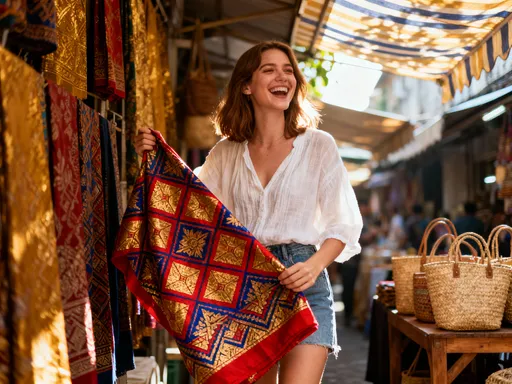
The fabric stores of Al-Suwaiqiyya are particularly notable. Rows of bolts display cotton, silk, and brocade in rich colors and patterns, many imported from South Asia and the Levant. Women browse slowly, feeling the texture of each material, discussing designs for upcoming family gatherings. Some shops specialize in embroidery, offering custom work for wedding garments or religious events. These stores are not just commercial spaces—they are cultural keepers, preserving textile traditions that have been part of Meccan life for generations.
For the mindful traveler, Al-Suwaiqiyya offers more than souvenirs; it offers insight. Here, commerce is not detached from community but woven into it. The district reminds us that urban life at its best supports intergenerational knowledge, skilled labor, and personal dignity. In a world increasingly dominated by digital transactions and impersonal service, Al-Suwaiqiyya stands as a quiet affirmation of slower, more meaningful ways of living and trading.
Pedestrian Pathways and Hidden Staircases
Mecca’s mountainous terrain has shaped its urban form in ways that are often overlooked. Unlike cities built on flat plains, Mecca’s layout follows the natural contours of the hills, resulting in a network of footpaths, stone staircases, and elevated walkways that connect neighborhoods with vertical grace. These pedestrian routes are essential to daily life, allowing residents to navigate the city efficiently while avoiding the congestion of main roads. Yet they remain invisible to most visitors, who rely on motorized transport and guided tours.
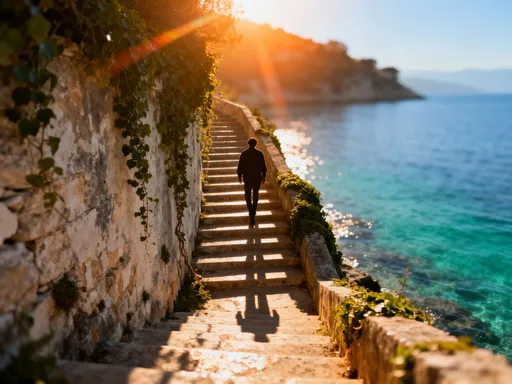
One of the most striking examples is the series of staircases linking Al-Jiyad to Aziziyyah. Carved from stone and worn smooth by generations of footsteps, these steps rise and descend through shaded corridors and arched passageways. Some are flanked by old houses with wooden balconies, others by small shrines or water fountains. Walking these paths, one experiences a different Mecca—one of quiet movement, personal journeys, and intimate encounters with the city’s fabric.
These pathways are not merely functional; they are social spaces. Neighbors greet each other as they climb, children race ahead with school bags bouncing, and elderly residents pause on built-in stone benches to rest. Some staircases are covered, protecting users from sun and rain, while others open to views of the city below. In the early morning and late evening, when temperatures are cooler, these routes come alive with walkers—some exercising, others simply enjoying a peaceful commute.
For travelers willing to explore on foot, these hidden routes offer a rare sense of discovery. They bypass the crowds, allowing access to residential areas where life unfolds naturally. A walk from Aziziyyah to the lower city might reveal a courtyard where women gather to prepare food for iftar, or a small mosque where the call to prayer echoes through a quiet alley. These moments are unscripted, authentic, and deeply moving.
The preservation of these pedestrian networks speaks to Mecca’s resilience. Despite rapid vertical development, the city has maintained its walkability in certain zones, recognizing that not all movement needs to be fast or motorized. These pathways represent a slower, more contemplative way of being in the city—one that aligns with the spiritual values of mindfulness and presence. To walk them is to move not just through space, but through time, tracing the steps of countless others who have lived, worked, and prayed in this sacred place.
Green Spaces in the Urban Fabric
In a city defined by stone, steel, and pilgrimage, green spaces may seem like an afterthought. Yet in recent years, Mecca has made quiet but meaningful efforts to integrate nature into its urban landscape. Small parks, landscaped roundabouts, and tree-lined walkways now punctuate the concrete, offering residents and visitors alike a chance to pause, breathe, and reconnect with the earth. These spaces are especially valued during the non-peak seasons, when families seek respite from the heat and the intensity of religious sites.
One of the most beloved green zones is Al-Hada Park, located in the nearby mountain town of Al-Hada, a short drive from central Mecca. Nestled at a higher elevation, this park benefits from cooler temperatures and fresh air, making it a popular weekend destination. Families spread out on grassy areas, children play on swings and climbing frames, and couples stroll along shaded paths. Vendors sell fresh juice and snacks, while rest areas with seating and shade encourage longer stays. Though not within Mecca proper, Al-Hada Park serves as a vital lung for the greater metropolitan area, offering a contrast to the density of the holy city.
Within Mecca itself, smaller green spaces have emerged as oases of calm. Roundabouts once filled only with traffic now feature flower beds and palm trees. Some neighborhoods have converted unused plots into playgrounds or community gardens, where residents grow herbs and flowers. These spaces are modest in size but significant in impact, providing shade, beauty, and a sense of belonging. They are particularly important for women and children, who may have fewer opportunities for outdoor recreation in more crowded areas.
The design of these green areas reflects a growing awareness of urban well-being. Shade is prioritized, with pergolas and tree canopies protecting visitors from the sun. Seating is strategically placed to encourage social interaction, and accessibility is considered, with smooth pathways for strollers and wheelchairs. While still limited in number, these spaces signal a shift in urban thinking—one that recognizes the importance of balance between development and livability.
For travelers, visiting a park or garden in Mecca offers a different kind of spiritual experience. It is not centered on ritual, but on presence—on feeling the breeze, hearing birdsong, and watching children laugh. These moments of stillness, though simple, can be profoundly grounding. They remind us that even in the most sacred of cities, the need for rest, nature, and family connection remains essential.
The Future of Mecca’s Urban Identity
As Mecca continues to evolve, a quiet conversation is unfolding about the soul of the city. Rapid development has brought modern infrastructure, expanded accommodations, and improved accessibility for millions of pilgrims. Skyscrapers rise around the Grand Mosque, luxury hotels offer panoramic views, and underground tunnels streamline movement. These advancements have undeniably enhanced the pilgrimage experience. Yet they also raise questions: How much change can the city absorb before its character is lost? Can modernization coexist with authenticity?
The answer may lie in balance. There is growing recognition among urban planners, community leaders, and residents that preservation is not resistance to progress, but a form of wisdom. Efforts to protect historic neighborhoods, maintain pedestrian access, and integrate green spaces reflect a desire to honor Mecca’s layered identity. While specific large-scale projects are not discussed here, the trend toward more thoughtful development—ones that consider not just capacity but culture—is evident.
Community input plays a crucial role in this process. Residents who have lived in Mecca for generations possess an intimate understanding of its rhythms and needs. Their voices, when included in planning discussions, help ensure that new developments serve people, not just statistics. For example, preserving narrow alleys and staircases is not just about nostalgia—it is about maintaining walkability and social cohesion. Protecting older homes is not merely architectural conservation—it is about safeguarding a way of life.
The challenge ahead is to grow without erasing, to modernize without homogenizing. Mecca does not need to choose between being a global religious center and a living city. It can be both. The hidden spaces—rooftops, alleys, markets, and parks—prove that tradition and modernity can coexist. They show that even in a place of immense spiritual gravity, the small, everyday moments matter deeply.
Conclusion
Mecca’s true character isn’t only in its grandeur but in the quiet corners where life unfolds away from the spotlight. These hidden urban spaces tell stories of resilience, tradition, and community. By stepping beyond the expected, travelers gain not just sight, but understanding. In a city of millions, the smallest spaces often hold the deepest meaning. To know Mecca fully is to walk its backstreets, share its rooftop moments, and listen to the quiet hum of daily life. It is to see that holiness is not only in the ritual, but in the way people live, connect, and preserve their heritage. And in that awareness, one finds a richer, more enduring kind of pilgrimage—one that lingers long after the journey ends.